Scientifically proven method

    Sustainable performance, even under pressure

    Less tension and better performance, with evidence-based group training for your team.

    4.7/5 on Google Reviews
    Duurzame inzetbaarheid training presentatie
    “Innerleaps delivered measurable results. Our team rated the training 9.4/10.”

    Jochem van der VeenCEO at TheyDo

    Trusted by

    Vitaliteitstraining TheyDoVitaliteitstraining VU AmsterdamVitaliteitstraining Tele2Vitaliteitstraining Parnassia GroepVitaliteitstraining LentizVitaliteitstraining Gemeente Den Haag

    Do you recognise these challenges in your team?

    These are the challenges we address with our group training for teams.

    A high workload

    The volume of work and the ambitions lead to tension and stress.

    Juggling many balls

    Your team does not only have a demanding job, but also a private life that asks for a lot of attention.

    High absenteeism costs

    Sick leave is a high, recurring cost.

    The effect of our training on your team

    The scientifically proven effects on your team.

    -26%

    stress

    Less tension

    Your team notices tension earlier and adjusts course itself.

    More resilience under high pressure and faster recovery.

    +8.6%

    productivity

    Better results

    Better concentration and fewer mistakes, even under pressure.

    Productivity rises while tension actually goes down.

    -70%

    risk of long-term absence

    Lower absenteeism costs

    Less absenteeism and less long-term absence.

    A cost item that structurally comes down.

    Sources: Aikens et al. (2014), Innerleaps internal research, De Bruin et al. (2018)

    40+ years

    of scientific research

    Our method is based on MBSR, developed in 1979 at the University of Massachusetts. Hundreds of studies prove it effectively reduces stress. It works so well that universities such as Oxford and Amsterdam continue to research it.


    Method developed at Oxford UniversityMethod developed at the University of MassachusettsAttention training studied at the University of Amsterdam
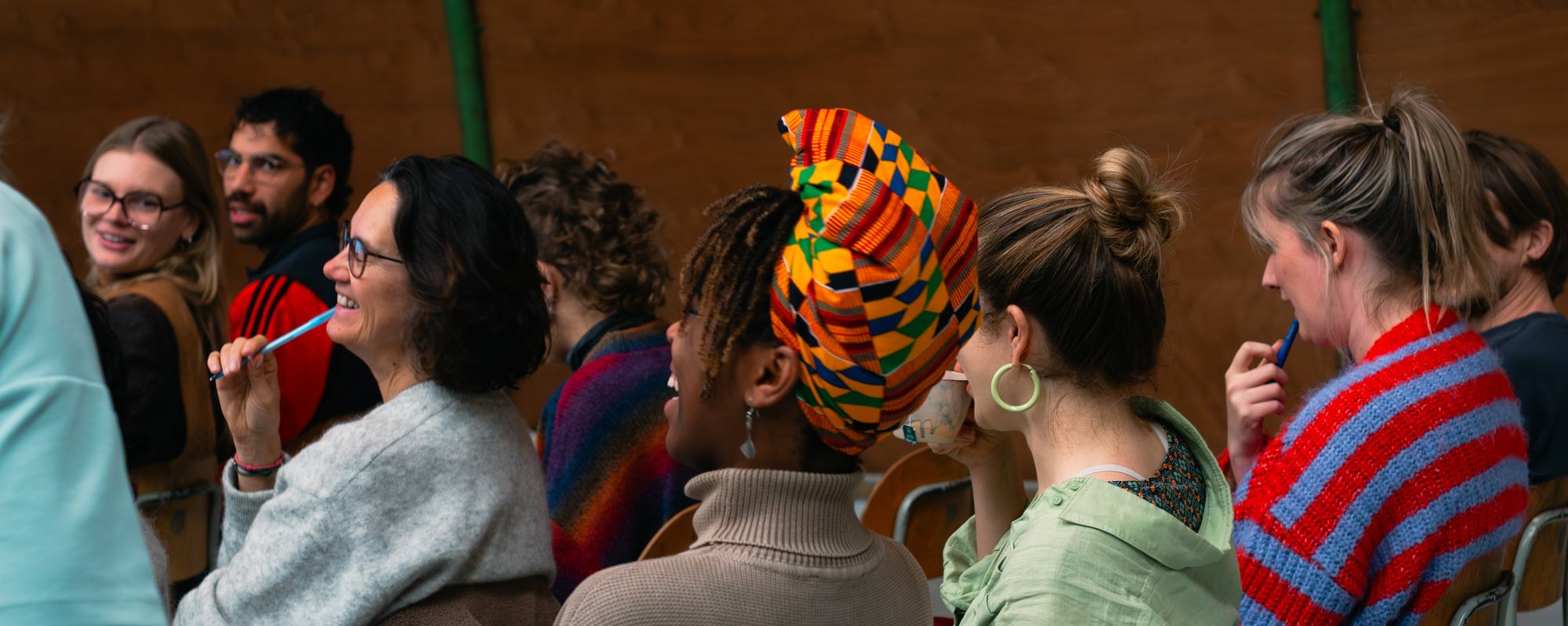
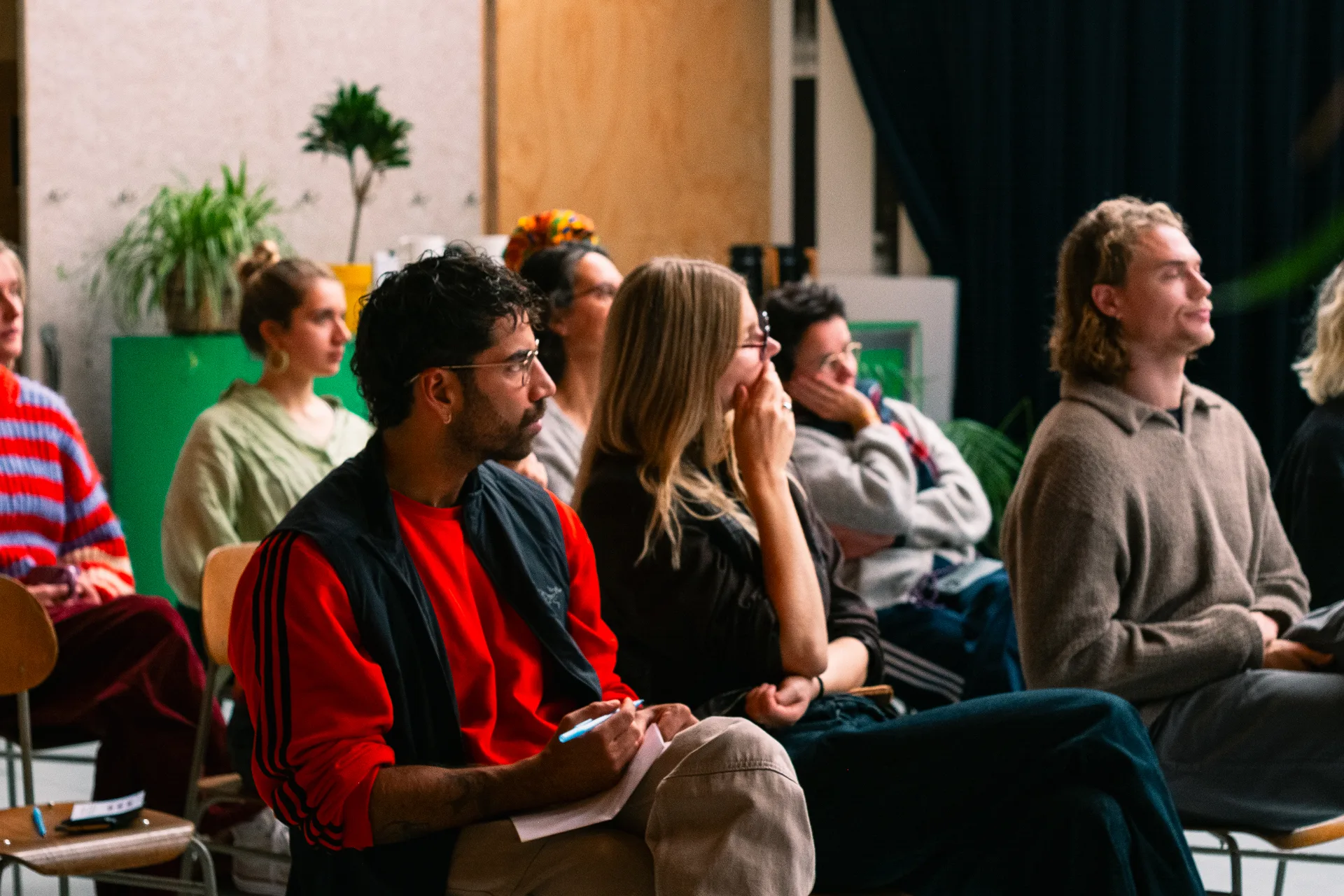
    A group of colleagues seated together in a session, listening and laughing

    Group training for real behaviour change

    Our core programme runs for 6 weeks. Ask us about tailored options for your team.

    Weekly group workshops

    Every week, a live 60-minute group workshop led by one of our accredited trainers.

    Accredited professional trainers

    All our trainers are VMBN-accredited at category 1 for attention training, the highest standard in the Netherlands.

    15 minutes of practice

    Participants aim to practise about 15 minutes a day, 5 days a week, using our workbook and audio recordings.

    Workbook with theory and reflection

    Understanding and impact through a workbook with concise theory and quick reflection questions.
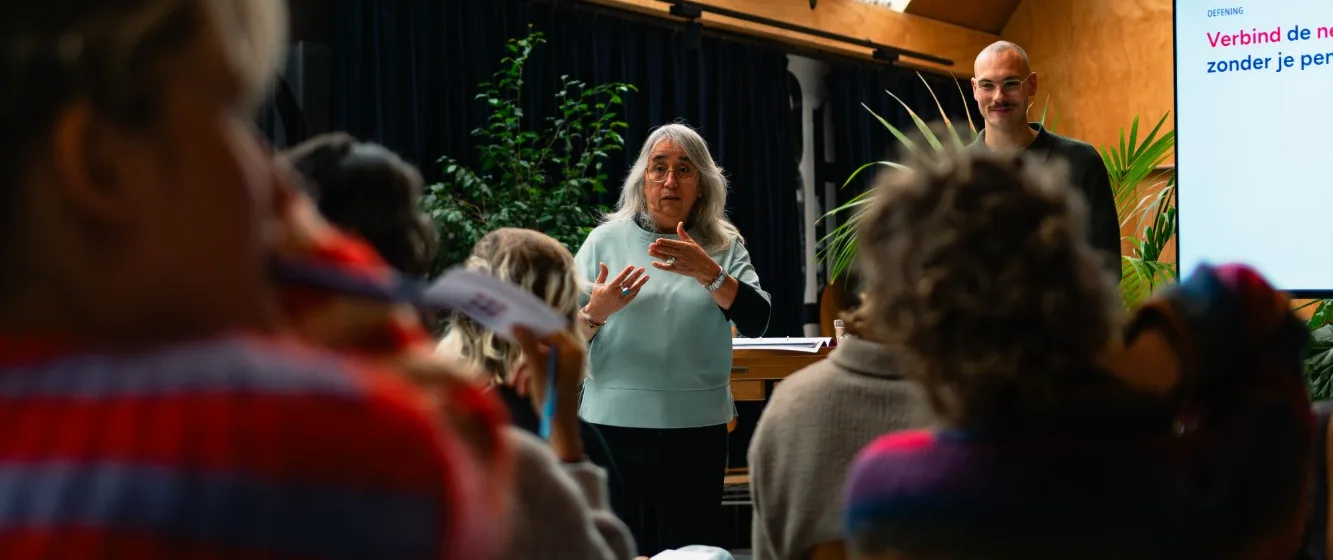
    Trainer leading a live group workshop to reduce stress and prevent absenteeism

    The 6-week core programme

    In the core programme a different theme is covered each week. The programme is set up this way to create lasting impact.

    Week 1Control centre

    Breaking through autopilot

    Whether we are working, sitting in a meeting or talking to a colleague, sometimes our thoughts are somewhere else. Participants learn to notice more quickly when they have drifted off, and strengthen their ability to concentrate.

    Week 2Warning system

    Recognising early warning signals

    Participants train their warning system so they recognise tension sooner. By training the body's "stress sensors", tension can be regulated in time.

    Week 3Control centreWarning system

    Working with pressure and stress

    Under pressure, working memory often goes haywire. Participants learn a quick reset technique. They also learn different ways to stay effective and sharp throughout the working day.

    Week 4Control centreWarning system

    Mental clarity

    Not every thought is a fact. Participants learn to recognise the difference between productive thinking and rumination. They also learn to observe their thoughts instead of getting carried away by them. The result: more peace of mind and less worrying.

    Week 5Control centre

    Better collaboration through conscious listening

    In this week participants train to truly listen, take perspective and respond from understanding instead of reflex.

    Week 6Control centreWarning system

    Lasting integration in your life

    Participants reflect on the programme and develop their own daily routine. That is precisely why the programme is still effective a year after the training.

    What participants notice after six weeks

    We asked participants where they noticed improvement.

    68%

    felt less stress and tension

    The most-mentioned change across all our cohorts.

    • Less time on autopilot55%
    • Less mental fatigue55%
    • Better concentration and focus41%
    • Less rumination and overthinking36%
    “Innerleaps delivered measurable results. Our team rated the training 9.4/10. Exactly what we needed.”

    Jochem van der Veen
    Jochem van der VeenCEO at TheyDo
    TheyDo
    Participants in an Innerleaps masterclass

    Try it yourself in our masterclass

    In 60 minutes, your team experiences how we work, before you commit to anything.

    Innerleaps trainer leading an interactive masterclass with participants raising their hands

    01 · 20 min

    A short call

    What you've tried, what your people are carrying, and whether this fits.

    02 · 60 min

    No-obligation masterclass

    Your team experiences the method first-hand. You see how they respond.

    03 · 6 weeks

    The programme

    Enjoyed the masterclass? Then the programme starts: one fixed hour a week during working hours, max 15 per group.

    Why organisations choose us

    Little time, lasting effect

    1 hr / week + 15 min / day

    We took a proven method and made it fit the working week, so organisations can roll it out and people keep the results.

    What that means

    1 live hour a week15 min a dayWithin working hours

    Scientific research

    40+ years

    Built on MBSR, one of the most thoroughly researched stress management methods in the world, with proven lasting behaviour change.

    Researched at

    Method developed at Oxford UniversityMethod developed at the University of MassachusettsAttention training studied at the University of Amsterdam

    Accredited trainers

    Category 1

    All our trainers hold the highest VMBN accreditation.

    Accredited by

    VMBN Trainer category 1

    Discover the impact for your organisation

    Based on 40 years of scientific research

    Contact details

    Organisation details

    * All fields are required. Your details are treated confidentially.

    Frequently asked questions

    The training does not have to be online, but an online format makes participation easier for employees. Research shows that online sessions are just as effective as in-person meetings. Training attention happens mainly through daily practice, while the workshops support that process. To give as many employees as possible the chance to take part, we therefore prefer an online training.

    Participants receive a workbook at the start with a piece of theory and short exercises for each week. They also get audio recordings of the exercises. Some exercises can be done during daily routines like brushing teeth, showering or doing the dishes, so they cost no extra time. Other exercises ask about 12 minutes of sitting calmly to train attention.

    All exercises are aimed at training attention. The goal is for participants to work and live with more focus and awareness. That is why the exercises are directly applicable in daily life, for example while brushing teeth, eating or walking. Each week also contains a special attention training of 12 minutes that is done seated.

    The training contains weekly group workshops with a maximum of 15 participants. Participants practise in a safe and comfortable way by responding to concrete questions, without having to share personal stories. This creates an environment in which everyone feels at ease and can practise attention fully.

    Innerleaps' awareness trainings build on evidence-based programmes such as MBSR, MBCT and WorkplaceMT. The foundation rests on 12 scientific studies, including multiple meta-analyses and randomized controlled trials. The evidence is strong enough that the U.S. military has incorporated attention training into its official doctrine (U.S. Army Field Manual 7-22), and organisations like Google, Apple, Microsoft, Nestlé and Unilever have implemented similar programmes.

    Innerleaps participants show measurable improvements in exactly the areas where most organisations feel the pain: 65 to 72% experience less stress 60 to 84% show a reduction in burn-out symptoms 64 to 77% become more resilient 58 to 60% are more productive at work 57 to 78% sleep better The risk of long-term sick leave drops by 70% (from 54.4% to 16.4%) Importantly, these effects are sustained for at least 12 months after the training. This is not a temporary boost, but lasting behavioural change.

    Based on conservative calculations, ROI ranges between 497% and 775% within the first year. For a group of 15 participants, this yields annual cost savings of €42,834 to €66,816. The returns come from three sources: 15 to 21% reduction in absenteeism, 5 to 8% productivity gains and 5 to 8% lower turnover. Want a calculation for your own organisation? Innerleaps provides an ROI calculator where you can input your specific absenteeism, salary and turnover figures.

    Innerleaps improves performance by optimizing working memory, the mental "workspace" where thinking, deciding and acting take place. This happens through three mechanisms: First, relevant information is selected faster and irrelevant information is suppressed more effectively. Focus increases, distraction decreases. Research shows up to 24% improvement on attention tasks (Jha et al., 2021). Second, stress and pressure normally occupy a large share of working memory. When that pressure decreases, capacity is freed up for the task itself. Third, working memory becomes more efficient: better results with less neural effort (Bailey et al., 2020). Employees perform sharper and have energy left at the end of the day.

    Sustainable employability means a team can keep performing under pressure without burning out. What usually gets in the way is tension that piles up. Innerleaps trains teams to spot and regulate that tension early, so they stay sharp and stay available.